Loïc Tréhédel recommends the photochemical reaction at the base of Nicéphore Niépce’s discovery of photography to solar Alchemy researchers.
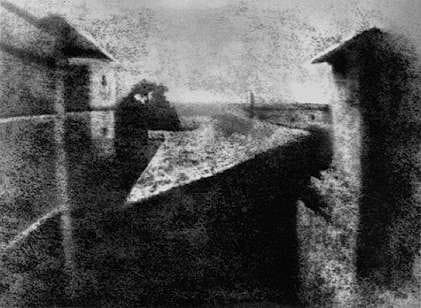
At the base of the invention of analog photography is a reaction of silver salt to the sun’s rays, precisely, the blackening effects of light upon certain substances, mainly silver, on which it acts as a decomposing power. In his book “Alchimie, Antique Science of demain”, in 1999, Loïc Tréhédel starts from the axiom that sunlight contains pure Spiritus Mundi, which only has been collected. The concept of “catching” photons, and with photons the Spiritus Mundi/Secret Fire from the Sunlight, is commonly known as “solar Alchemy”.
Perhaps the earliest reference to silver-based black and white photography is that of J. H. Schulze, who observed in 1727 a mixture of silver nitrate and chalk darkened being exposed to light. In 1777 C. W. Scheele discovered that when silver had been dissolved in a strong acid, the surfaces steeped in the solution became encrusted with minute particles of the metal, which in this state was darkening with increased rapidity. These facts were first ascertained and recorded regarding chloride of silver, or silver combined with chlorine. The first more or less stable images were obtained in 1824 by Nicéphore Niepce, a French physicist, using glass plates coated with a dispersion of silver salts in bitumen (a coal derivative). In the early 1830s, Niepce’s partner, Louis Daguerre, discovered by accident that mercury vapor could develop an image on a silver-plated copper sheet previously sensitized by iodine vapor. The daguerreotype image could be made permanent by washing the plate with a hot concentrated salt solution. In 1889 Daguerre demonstrated his photographic process to the Academy of Sciences in Paris. The process was later improved by using sodium thiosulphate to wash off the unexposed silver salts.
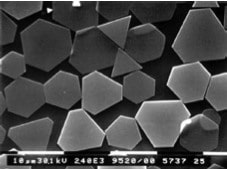
To understand the fundamental chemistry of silver-based photography, we must look at the photochemistry of silver salts. A typical photographic film contains tiny crystals of very slightly soluble silver halide salts such as silver bromide (AgBr), commonly referred to as “grains.” The grains are suspended in a gelatin matrix, and the resulting gelatin dispersion, incorrectly (from a physical chemistry standpoint) but traditionally referred to as an “emulsion,” is melted and applied as a thin coating on a polymer base or, as in older applications, on a glass plate. The figure below shows a schematic representation of the silver halide process. When light or radiation of appropriate wavelength strikes one of the silver halide crystals, a series of reactions begins, producing a small amount of free silver in the grain. Initially, a free bromine atom is produced when the bromide ion absorbs the photon of light:

Ag+Br- (crystal) + h? (radiation) → Ag+ + Br + e- The silver ion can then combine with the electron to produce a silver atom.
Ag+ + e- → Ag0.
Association within the grains produces species such as Ag2+, Ag20, Ag3+, Ag30, Ag4+, and Ag40. The free silver produced in the exposed silver halide grains constitutes what is referred to as the “latent image,” which is later amplified by the development process. The grains containing the free silver in the form of Ag4o are readily reduced by chemicals referred to as “developers”, forming relatively large amounts of free silver; that deposit of free silver produces a dark area in that section of the film.
Under the same conditions, the developer does not significantly affect the unexposed grains (1). Preparations of gold, platinum, mercury, iron, copper, tin, nickel, manganese, lead, potash &c. were more or less sensitive and capable of producing pictures of beauty and distinctive character.
But let’s listen to Loïc Tréhédel now: “A little amount of silver chloride or nitrate is exposed to the Sun, over a glass plaque, to its total decomposition. The salt, being turned violet, is then recycled to generate the initial chloride or nitrate and then again exposed to sunlight. The entire operation has to be repeated over and over a great number of times. After every re-cycle, the salt leaves a tiny black residue from which an even less residue ( some milligrams, in the best scenario) consists of a white powder, which turns red to the light and gets oily. This substance provides powerful transmutative properties but appears incompatible with Mercurius Philosophorum and cannot be multiplied. Our efforts went on towards other directions, particularly with chloride or nitrate, not of a common metal but the alchemical sulfur from silver. Now we hope to obtain more considerable quantities from this solar fire. Some African alchemists of our acquaintance appear to get encouraging results from studying the dissociation of copper sulfide hydrate ( CuSO4, 5H20) under the Zaire hot Sun”.
My commentary: concerning the Zairian alchemists in 1999 ( those who know the affair did get what I’m saying). Concerning the lack of multiplications, the dissociation of a similar salt in similar conditions appears more successful to be at the base of electric energy production in the project Tunur in the Tunisian desert. Anyway, I’m not so amazed that this Mercurius-like substance cannot multiply or pass the colors but still has some transmutative power. That appears to be a common feature among solar powders obtained under strong Sun conditions. I mean, are we so sure that the “electrically” ionized substance obtained with this method can not be sufficiently “electrically” ionized to be able to “naturally” perform some wonders on metals? Don’t let these words wither away like water in the desert. The “Solve et Coagula” processes often applied to raw matters to magnetize them in preparatory works are not so “concentrated”, but sometimes run along the same lines.
Anyway, Tréhédel also complains about the negligible amounts obtained. Yes, we know the drawback: something is certainly achieved by the solar way, but the amount is. And a certain amount would be indispensable since we have to partition the Mercurius. But this powder, in any case, is not Mercurius, even if we see a white powder from a black powder ending up turning into a red oil. In my opinion, this is just a highly ionized substance. Can we get Secret Fire/Spiritus Mundi from a highly ionized substance? Yes, as I said above, during the Magnetization process, in the first preparatory work, our raw matters undergo a kind of ionizing process ( see an Opus Magnum scheme).
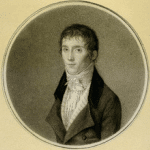
The french chemist, as well as historian of Alchemy, Eugène Chevreul wrote two articles on Niépce’s discovery, in “Journal des Savants” on february-march 1873, with the title “La Vérité sur l’invention de la Photographie – Considérations sur la reproduction, par les procédés de m. Niépce de Saint-Victor, des images gravées, dessinées ou imprimées“, or the truth about the invention of photography – considerations on reproduction, by the processes by Niépce de Saint-Victor, of the engraved-handmade-printed images. Chevreul defines Niépce as the heliography inventor and then passes to talks about “argent corné” , horny silver, ” lune cornée d’argent”, horny moon, silver chloride. But we will see how Chevreul passes easily from chloride to nitrate.
Eugène Chevreul: “The first operator who had horny silver in his hands in a laboratory must immediately see the changes it undergoes by the action of light rays. According to Arago, it would be an alchemist named Fabricius who first, in 1566, got the horny silver, pouring sea salt in a solution of a silver salt, and would have noticed the product’s coloring by the action of light. (In Fabricius’ book, De Rebus Metallica, printed in 1556, it is thoroughly discussed a sort of silver mine called horny silver, having the horn color and transparency, and fusibility and softness of the wax. This substance, exposed to light, goes from yellowish gray to purple, and at a longer prolonged action, it turns almost black; such was the natural horn silver. This salt has the remarkable property of blackening at the light, blackening even faster when the striking rays are the strongest. So it was in an alchemist’s laboratory that we had to look for the historical origin of the general principle of photography. In 1777, the Swedish chemist Scheele knew that the horny silver was more sensitive to the blue and violet rays of the solar spectrum than the red rays.” Thomas Wedgwood noted that a paper, or white leather, wet with a solution of silver nitrate, remains unchanged when kept in the dark. Still, if exposed to sunlight, it quickly changes color and, after passing through various shades of gray and brown, it eventually becomes almost black. The color alterations occur at a speed proportionate to the intensity of light. Under direct sunlight, it takes two or three minutes to produce the full effect; in the shade, it takes several hours, and the light transmitted through variously colored glasses cause different degrees of intensity.”
In his Traité de Chymie”- second book, Glaser does not point directly at the horny silver but speaks of “perpetual caustic”, that’s to say, silver nitrate or caustic moon. Here the operation he advises to adopt: Take two ounces of cupeled silver reduced in granules, or filings, dissolve it in a flask with double or triple good vital water, pour the solution into a cucurbit covered with its alembic, and light fire under the sand, remove about half the moisture from the strong water, and the water that comes out will be very weak, as the silver body retains to itself the strong water’s strength, then let cool the vessel for a few hours, and you will find the remaining material in the bottom of the cucurbit in salt form, which you will put in a good and big German crucible, and since he material when boiling tends initially to swell and can leak and get lost, place the crucible on a small fire, until the boiling have passed, and the matter has fallen to the bottom, and about that time you will increase the fire a little, and you will see the matter like oil on the bottom of the crucible, which you will pour into a well cleaned ingot form, which you have previously heated a little, and you will find it hard as stone matter, which you will keep in a box for use”.

By these means, it is proved that besides the functions of light and heat, the solar ray has a third, and what may be called photographic function, the cause of all the disturbances, decompositions, and chemical changes that affect vegetable, animal, and organic life.
By these means, it is proved that besides the functions of light and heat, the solar ray has a third, and what may be called photographic function, the cause of all the disturbances, decompositions, and chemical changes that affect vegetable, animal, and organic life. It had long been known that this power, whatever it may be termed – energy – actinism – resided more strongly, or was perhaps less obstructed, in some of the colored rays of the spectrum than in others–that solutions of silver and other sensitive surfaces were sooner darkened in the violet and the blue than in the yellow and red portions of the prismatic spectrum. Mr. Hunt’s experiments further prove that mere light, or the luminous ray, is little needed where the photographic or “chemical ray” is active and that sensitive paper placed beneath the comparative darkness of a glass containing a dense purple fluid, or under that deep blue glass commonly used as a finger-glass, is photographically affected almost as soon as if not shaded from the light at all. Whereas, if the same experiment is tried under a yellow glass or fluid, the sensitive paper, though robbed neither of light nor heat, will remain for a considerable time without any change. Though foreign to our subject, we may add that the same experiment Mr. Hunt applied to plants has been attended with similar results”. Footnote to the article on Hunt and Claudet experiments: Bulbs of tulips and ranunculuses have germinated beneath yellow and red glasses, but the plant has been weak and has perished without forming buds. Under a green glass (blue being a part of the color), the plants have been less feeble and have advanced as far as flower buds, while beneath the blue medium, perfectly healthy plants have grown up, developing their buds and flowering in perfection.
- From Online Chemical Engineering Information. Dr. Drew Myers, Chemistry Coordinator Consultant in Surface, Colloid, and Polymer Science;