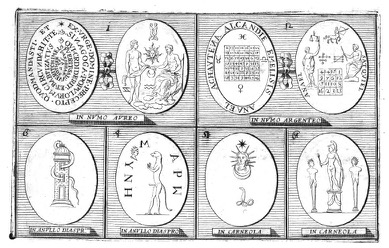
After the title page, we see a preface engraving. Next to the jeweler’s counter, leaning against a wall we see a stick. Or maybe it’s a sturdy whip. This tool, a strip of leather or length of cord fastened to a handle, used for flogging or beating a person or urging on an animal, is a symbol standing for spirits to be drawn in the conviction those Cameos owners can tame them. We can also notice Hermes/Mercurius helping a hesitant lady to choose the right gem. At the same time, old Saturn, with an hourglass next to it, is resting on the floor.
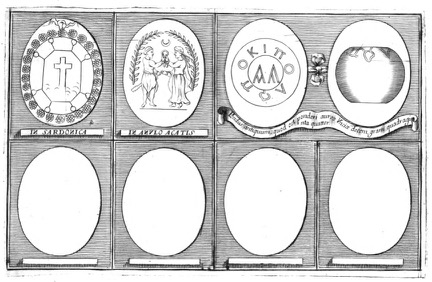
All over the hall, we can recognize those “… quae obscurissimi hyerogliphicis supersticiosisque caratheribus circundata sunt”, as Antonio Capello called them, putting on display his collection. In fact, at the beginning of the eighteenth-century hermetic symbols were already described as obscure and superstitious hieroglyphs. Below, I chose the series of engravings taken from Prodomus Iconicus, which is unquestionably rich in hermetic-like allegories. A recurring feature in the iconography of engraved gems is the almost ubiquitous representation of the god Hermes, either in person or through his symbolic attributes.
See also Voynich Manuscript and the Unknown Part of the Rhythm; Luc Montagnier, Water and DNA Induction Transmission.